

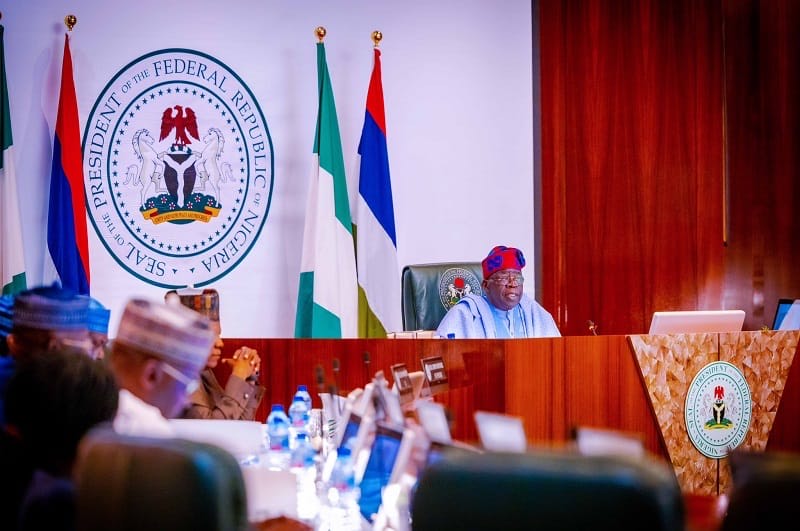
Abuja — President Bola Tinubu has directed state governments to begin sharing the cost of electricity subsidy with the Federal Government, marking a major fiscal shift in the management of Nigeria’s power sector.
Funding for the subsidy will now be drawn from the Power Assistance Consumers Fund (PCAF), a government-backed pool designed to support low-income and vulnerable households through targeted electricity subsidies rather than blanket price controls.
The directive was disclosed by the Director-General of the Budget Office of the Federation (BoF), Mr. Tanimu Yakubu, during the opening of the 2026 Post-Budget Preparation workshop on the Government Integrated Financial Management Information System (GIFMIS) in Abuja.
Speaking through the Director of Expenditure (Social), Mr. Yusuf Muhammed, Yakubu said states that benefit politically from electricity subsidies must also contribute financially, stressing that the Federal Government can no longer shoulder the burden alone.
“Subsidy costs must be explicit, tracked and funded. If tariffs are kept below cost, the gap created is a subsidy, and that subsidy is a bill that must be paid,” he said.
According to him, the President has ordered the operationalisation of a clear framework to distribute electricity subsidy costs across all tiers of government, invoking provisions of the electricity sector’s legal framework to ensure transparency and accountability.
He noted that beginning in 2026, subsidy-related liabilities must no longer be hidden or pushed into the electricity market as arrears, warning that unfunded commitments often resurface as liquidity crises.
More than 18 states are already operating electricity regulatory agencies, including Lagos, Ondo, Osun, Ekiti, Edo, Delta, Bayelsa, Akwa Ibom, Cross River, Abia, Anambra, Imo, Kogi, Niger, Nasarawa, Plateau, Gombe and Jigawa.
Yakubu also revealed that President Tinubu has ordered a review of Nigeria’s Fiscal Responsibility Framework to make fiscal rules more dynamic and enforceable. The review will include clearer fiscal anchors, better-defined escape clauses for economic shocks, stronger reporting standards and tighter control of contingent liabilities.
He added that capital projects in the 2026 budget must be delivery-ready and finance-ready, stressing that the government is shifting from listing projects to financing and completing them through structured project financing, public-private partnerships and blended funding.
Reacting to the development, the Nigerian Governors’ Forum (NGF) said it was reviewing the directive and declined further comment.
Similarly, state electricity regulatory commissions held an emergency virtual meeting to examine the implications of the policy. Officials said they would study the directive before issuing formal responses.
Economic experts described the move as inevitable given the rising cost of electricity subsidies, estimated to have pushed sector debts to about ₦5 trillion.
Chief Executive Officer of the Centre for the Promotion of Private Enterprises (CPPE), Dr. Muda Yusuf, said states had previously borne fuel subsidy costs indirectly and would likely face a similar situation with electricity.
Energy expert Prof. Wumi Iledare described the directive as a major fiscal and political shift, warning that its success would depend on a transparent and rules-based cost-sharing formula that considers states’ fiscal capacity.
However, legal and power sector experts raised concerns about the Federal Government’s constitutional authority to compel states to fund electricity subsidies, arguing that any such contribution may need to be voluntary or implemented through deductions from Federation Account allocations.