
Nigeria’s domestic petrol supply recorded a major boost in December as the Dangote Refinery increased in-country Premium Motor Spirit (PMS) output by 65 per cent, strengthening national fuel sufficiency and easing pressure on imports.
Latest data released Thursday by the Nigerian Midstream and Downstream Petroleum Regulatory Authority (NMDPRA) showed that petrol supply from the Dangote Refinery rose from 19.47 million litres per day in November to 32.01 million litres per day in December, marking the sharpest monthly increase recorded in 2025.
The surge in output coincided with a leadership change at the NMDPRA, following the exit of its former Chief Executive Officer, Farouk Ahmed, amid a prolonged regulatory dispute with the Dangote Group over fuel import licensing despite growing local refining capacity.
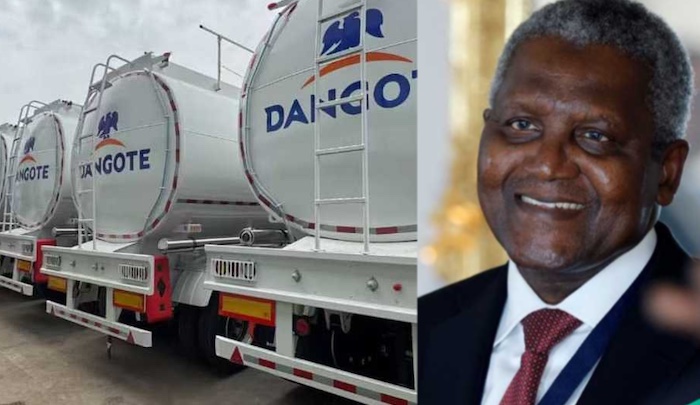
Confirming the increase, President of the Dangote Group, Alhaji Aliko Dangote, disclosed that petrol loading has since climbed further, averaging 50 million litres daily following the leadership restructuring ordered by President Bola Tinubu.
According to the NMDPRA, the rise in local supply significantly improved Nigeria’s fuel stock position. National petrol sufficiency increased to 29.20 days in December, up from 16.65 days in November, providing a stronger buffer against supply disruptions and distribution challenges.
An analysis of the data showed that both the 32 million litres daily local supply and 29 days PMS sufficiency recorded in December were the highest levels achieved throughout 2025.
Fuel consumption also surged during the period, driven by festive-season travel and improved availability. Average daily petrol consumption rose to 63.7 million litres in December, up from 52.9 million litres per day in November, representing a month-on-month increase of over 20 per cent.
Total domestic petrol supply increased modestly from 71.5 million litres per day to 74.2 million litres per day, helping stabilise distribution nationwide, although consumption growth outpaced supply in percentage terms.
In contrast, diesel supply declined from 20.4 million litres per day in November to 17.9 million litres per day in December, even as consumption rose slightly. Liquefied Petroleum Gas (LPG) supply edged up to 5.2 metric tonnes per day, while domestic natural gas supply increased marginally to 4.787 billion standard cubic feet per day, supporting power generation and industrial activity.
Beyond Dangote’s contribution, the NMDPRA confirmed continued progress in Nigeria’s refining sector. The Waltersmith Refinery Train 2, with a capacity of 5,000 barrels per day, completed pre-commissioning activities in December and is expected to introduce hydrocarbons by January 2026. The agency also issued new licences to establish and construct refineries, signalling sustained investor confidence.
Speaking at Dangote Cement’s 2026 Distributors’ Awards Night in Lagos, Dangote reiterated the group’s commitment to Nigeria’s industrial growth and revealed plans to expand the refinery’s capacity from 650,000 barrels per day to 1.4 million barrels per day, positioning it among the world’s largest facilities.
He said the expansion aligns with the Dangote Group’s Vision 2030, aimed at building a $100 billion enterprise and supporting Nigeria’s target of becoming a $1 trillion economy by 2030.